
Royal Papworth Hospital NHS Foundation Trust is one of eight hospital trusts highlighted by NHS England and the government for helping patients in the East of England and nationally access treatment more quickly.
Each trust will receive £2 million in additional funding to improve facilities or purchase new equipment to support patient care.
The NHS closely monitors not only the size of waiting lists, but also how long patients wait. The national standard is that 92% of patients should receive treatment within 18 weeks of referral.
Between April and September 2025, Royal Papworth achieved a 9.1 percentage point improvement in our 18-week referral-to-treatment (RTT) performance, the second best in England.
In those six months, the percentage of patients being treated within 18 weeks rose from 63% in April to 72.1% in September. It has further increased since then, to 73.8% by the end of October.
During that time, the size of our hospital’s waiting list has also dramatically decreased. In April, 7,403 patients were waiting for treatment, and the list was continuing to grow.
By the end of September, our waiting list had fallen to 6,080 – an 18% reduction. It further reduced in October, to 5,893, representing a 20% overall decrease.
Chief operating officer Harvey McEnroe said: “This progress has been achieved through significant hard work and targeted efforts by all our teams, both on the front line and behind the scenes.
“We’ve run extra clinics, carried out additional weekend procedures, introduced new technology and changed the way we work – all to make things better for the people waiting for our care.
“We understand how difficult it can be for people to live well while they wait, and we will use this funding to support further improvement in patient care and clinical services as we’re committed to doing even more to reduce waiting times and deliver timely, high-quality care for our patients.”
Medical director Dr Ian Smith, who is also a consultant respiratory physician, said: “Shorter wait times mean patients get relief from their symptoms faster and get back to their normal life sooner.
"But there are other benefits. People who need interventions including surgery who are treated earlier are less deconditioned, which improves their chances of achieving better outcomes and shortens recovery times.
“It sets off a virtuous cycle: the shorter time people wait, the more likely it is that their treatment will be effective. More effective earlier interventions release resource to treat the next cohort of people who need our care and ease pressures across other healthcare providers.”
Treating the longest waiters
A major focus in recent months has been treating patients who had been waiting the longest, many of whom required cardiology procedures.
One of those people was 81-year-old Roderick from Gamlingay, South Cambridgeshire who had waited more than a year for a TAVI (transcatheter aortic valve implantation) which treats aortic stenosis.
Roderick arrived for his procedure with his lifelong companion, Growly the teddy bear, who has accompanied him for 77 years on adventures ranging from boarding school to parachuting.
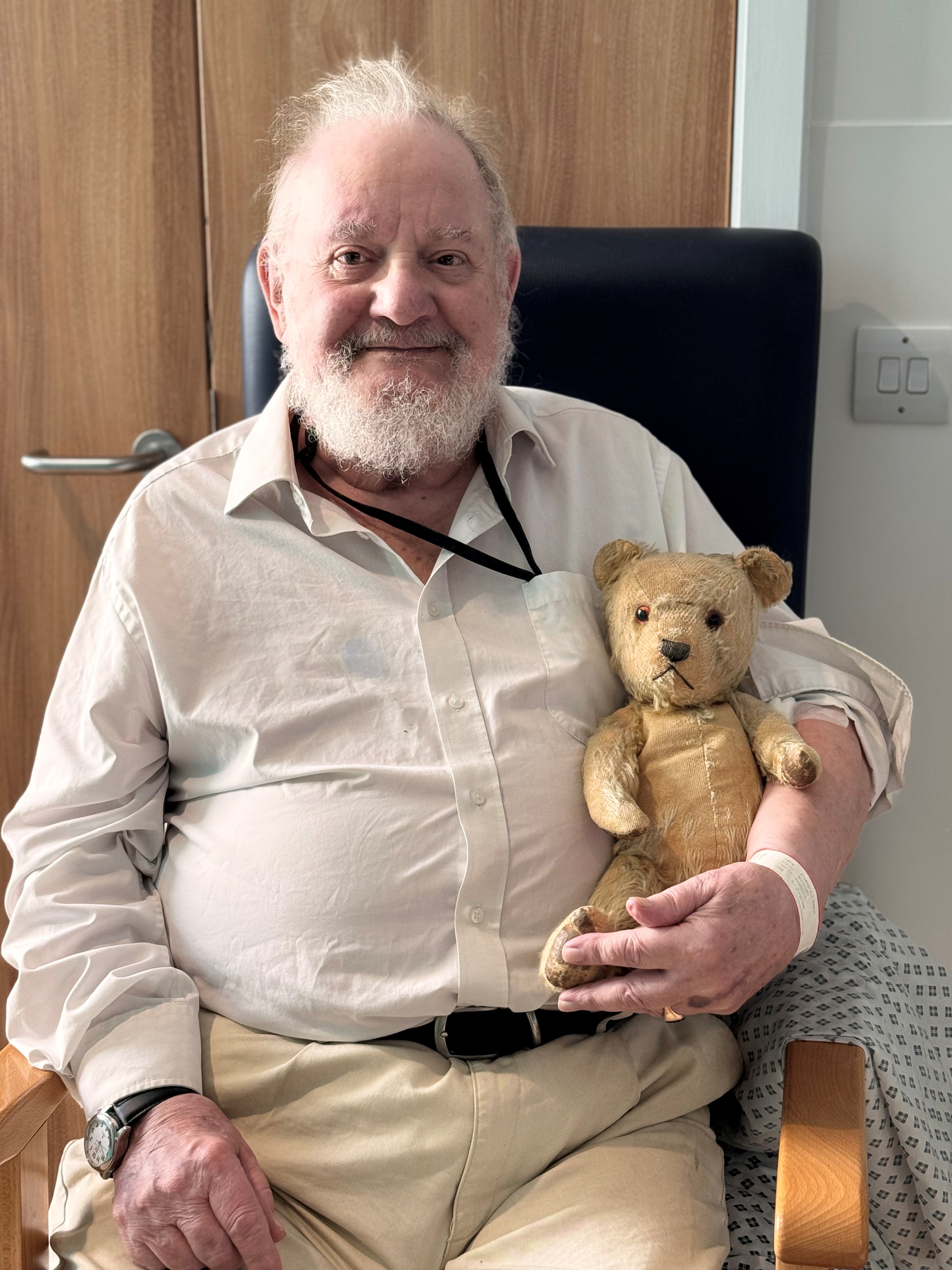
Roderick with his beloved teddy bear, Growly
Reflecting on his treatment, Roderick said: “It was painless, and I was even able to watch the new valve being inserted on the X-ray.
“Before my TAVI, life was awkward – I needed to hold onto furniture to walk and was constantly breathless. Now I feel absolutely fantastic. I can walk freely again and breathe easily.”
Looking ahead, he added: “I have a boat on the Norfolk Broads I can’t wait to get back on. I’ll also be reprising my role as Santa on a narrow-gauge railway – something I couldn’t do last Christmas due to my health.”