When 36-year-old Aimee went to A&E in February 2025 struggling to breathe, she had no idea how complex her health journey was about to become. A previously fit and healthy professional dancer, she’d always led an active lifestyle and was rarely unwell.
“I started noticing I was short of breath just walking up the stairs,” she explains. “But I hadn’t been working out much, so I thought maybe I was just a bit unfit or had picked up a bug. I never imagined it could be anything serious.”
The months that followed have been deeply challenging and emotional for Aimee and her family. Her complex care spanned four NHS trusts and involved multiple specialist teams, ultimately leading to a life-saving double lung transplant. Today, Aimee thanks NHS staff for not only saving her life, but for giving her the chance to meet her daughter, Jessica.
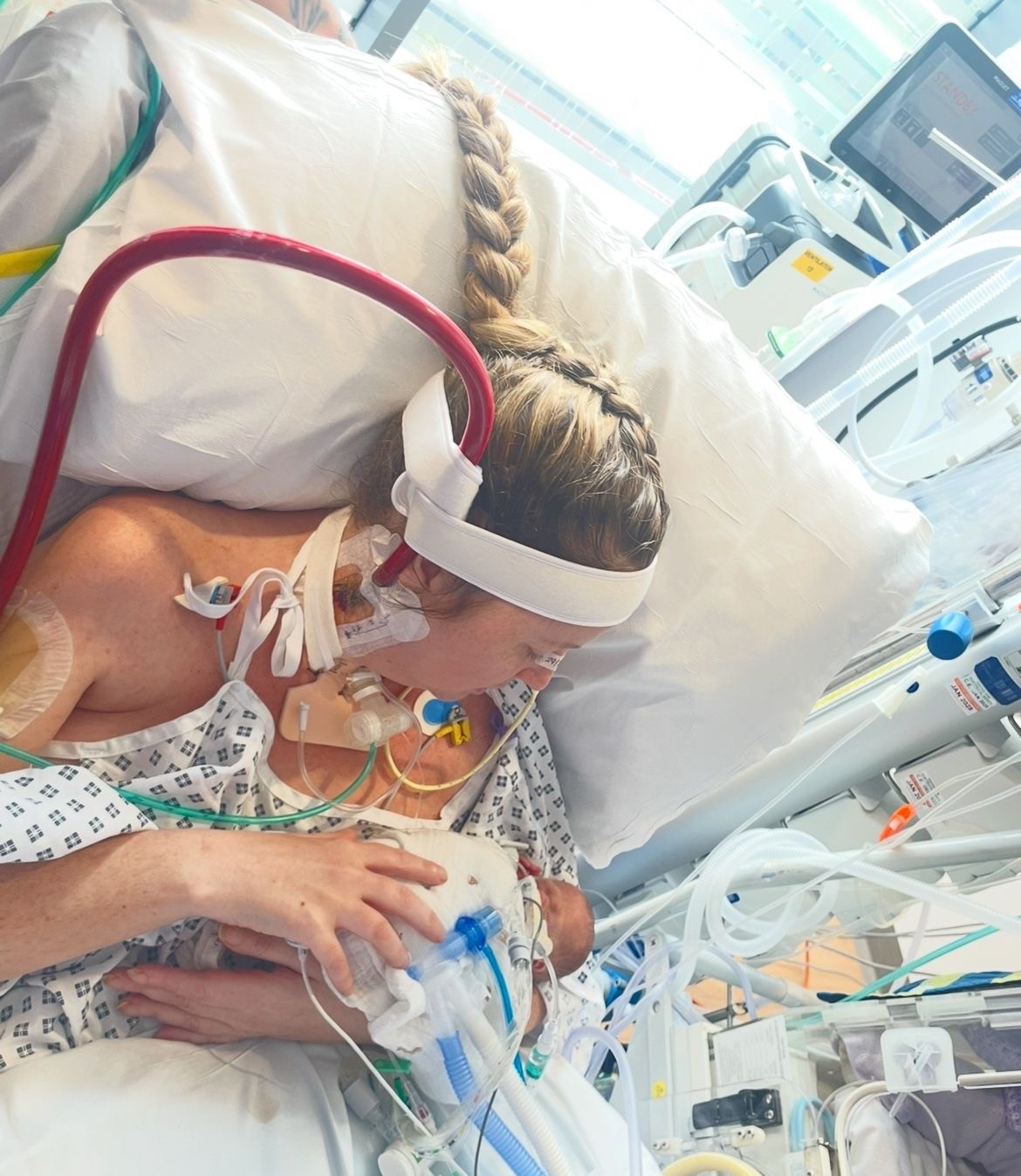
Aimee cuddling baby Jessica in one of our critical care rooms
A family history of heart and lung problems
Aimee had long been aware of a family history of heart and lung problems, though the exact causes remained unclear. Her father died at the age of 38 from fibrosis of the alveoli - a condition where scarring stiffens the lungs, reducing oxygen supply. His diagnosis was believed to be linked to environmental dust exposure from his work as a plasterer and glassblower.
Her sister was born with a congenital heart condition and later underwent a heart and lung transplant but died aged just 21.
“I remember both of them had quite pronounced nail clubbing*,” Aimee recalls. “I didn’t think much of it until I started noticing the same thing happening to me.”
In February 2025, Aimee began experiencing severe breathing difficulties and went to A&E near her home in Nottingham. Whilst at Nottingham University Hospitals NHS Trust (NUH) she was diagnosed with pneumonia and discovered she was three weeks’ pregnant. A CT scan also revealed lung abnormalities, but further investigations had to be postponed due to the pregnancy.
After several nights in hospital, Aimee was sent home on oxygen, but her condition deteriorated over the following weeks.
“Even rolling over in bed left me breathless,” she says. “I tried to avoid getting up to use the toilet because it took me 15 minutes to recover afterwards.”
Aimee’s midwife raised concerns about her breathing difficulties, and she was referred back to NUH and then transferred to Royal Papworth Hospital NHS Foundation Trust in June 2025. Here, our interstitial lung disease (ILD), critical care and transplant teams worked closely with obstetric experts and midwives from The Rosie Hospital - part of Cambridge University Hospitals NHS Foundation Trust - to manage a complex and rapidly evolving situation.
“The plan was to get the pregnancy as far along as possible,” Aimee explains. “Everyone from maternity to transplant and critical care worked together to give me and my baby the best chance.
A cardiac arrest and urgent lung transplant listing
However, in early July 2025, at just 24 weeks and five days, Aimee went into premature labour whilst in our critical care unit. Her daughter, Jessica, was delivered in one of our theatres and immediately transferred to The Rosie Hospital’s neonatal intensive care unit (NICU).
Days after Jessica’s birth, Aimee suffered a cardiac arrest whilst in critical care. She was resuscitated, placed on ECMO and, under the care of Royal Papworth Hospital's lung transplant and ILD consultant teams, was added to the urgent transplant list.
Soon afterwards, thanks to the gift of organ donation, she received a double lung transplant.
Since then, Aimee’s recovery has been challenging.
“My new lungs weren’t providing enough oxygen,” she explains. “My oxygen needs kept rising due to infections, and I had to be put back on high-flow CPAP (continuous positive airway pressure).
“Then a tracheostomy was fitted which meant I couldn’t speak and had to be tube-fed.
“At one point, I couldn’t even lift my arms,” she recalls. “I could only move my eyes. It was very scary - I felt completely lost.”
A turning point came a month later when our critical care nurses arranged for baby Jessica to be brought over from NICU in her incubator. Until then, Aimee had only seen photos of her daughter.
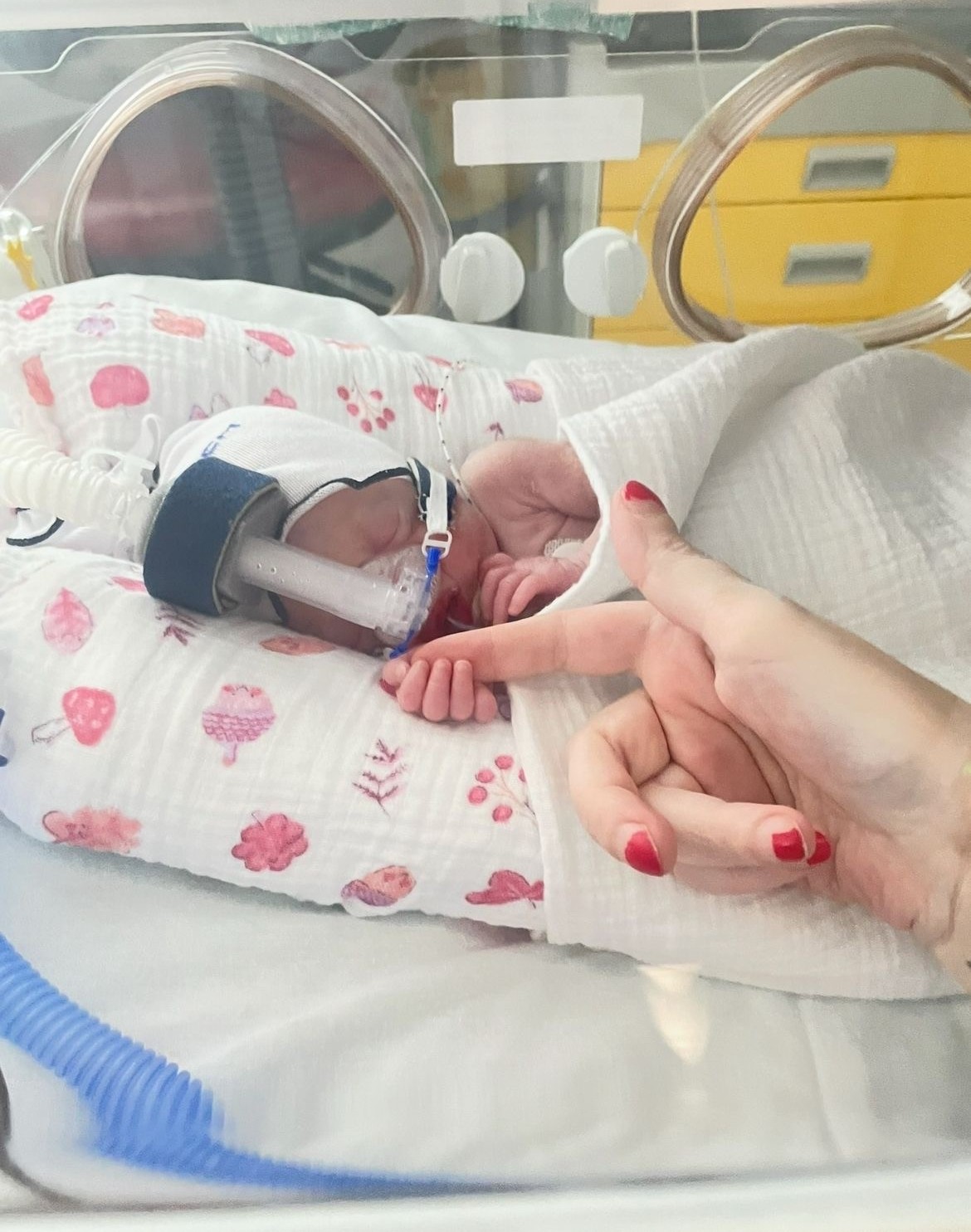
Baby Jessica in The Rosie's NICU
“That moment meant everything,” Aimee says. “The nurses did my hair, helped me into a chair, and I had my first cuddle with Jessica. It was incredibly emotional.
“Before that, I was still being hoisted and couldn’t move or wash myself. But I was told that once I could get in and out of the wheelchair, I’d be able to visit Jessica every day and that gave me the motivation to keep going.”
With daily physiotherapy and nursing support, Aimee gradually regained her strength. She was taken off ECMO, her tracheostomy was removed, and she relearnt how to eat and walk.
In September 2025, Aimee was discharged from Royal Papworth Hospital and now lives in Rotherham.
Jessica was transferred to Doncaster Hospital’s NICU to be closer to Aimee, where she continued to grow stronger each day with round-the-clock care and feeding tube support.
In December 2025, Aimee’s hope that they would be home together in time for Jessica’s first Christmas came true. Jessica was discharged from hospital exactly five months to the day since she made her early arrival in our operating theatre in July 2005.
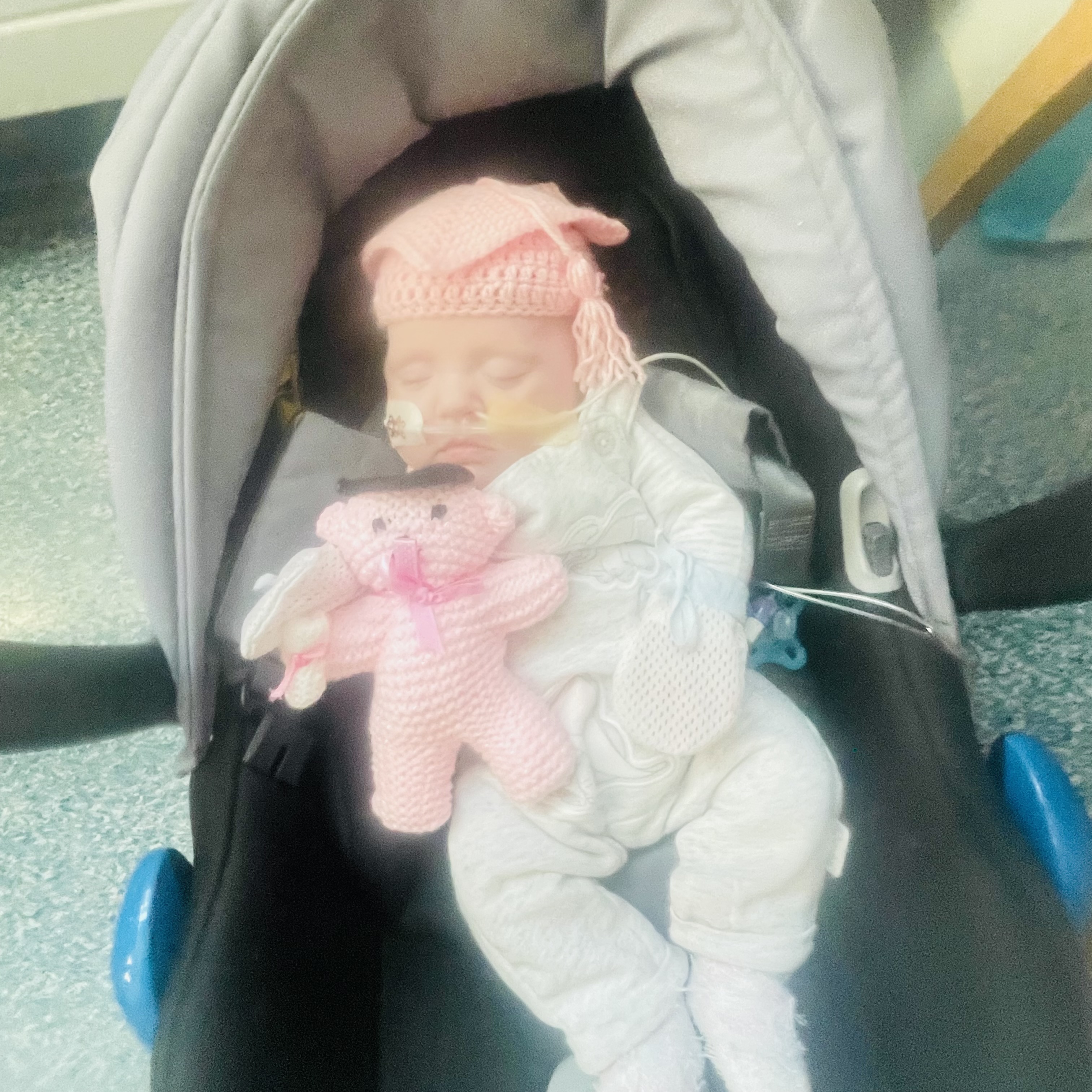
Jessica leaves hospital five months after her birth
Aimee speaks with deep appreciation for the kindness and teamwork shown by everyone involved in both her and Jessica’s care - from maternity and NICU to respiratory, transplant, ILD, critical care, physiotherapy, and nursing. The nurses, healthcare support workers and physio team, in particular, were a huge support, helping her through both the physical and emotional challenges of recovery.
“The care we’ve received is just incredible,” Aimee says. “Even in the scariest moments, I always felt I was in safe hands and completely trusted the team.
“When I couldn’t move or speak, the nurses made sure I still felt human,” she says. “They washed my hair, applied moisturiser, and helped me feel like myself again. Those little things meant everything.
“I was treated like a person, not just a patient. The staff understood my anxieties and even adjusted how they stood around me to keep me calm. It’s those small acts of kindness that made all the difference. I owe them everything.”
Genetic testing has revealed that Aimee carries a gene variant thought to be triggered by pneumonia, which contributed to her rapid decline.
Further testing is underway on samples from her late sister and baby Jessica to determine whether a hereditary condition may have been passed down through Aimee’s father's side.
“Knowing this gives us peace of mind,” she says. “If anything similar ever happens to Jessica, we’ll catch it early. That knowledge brings hope.”
Aimee is steadily regaining her strength, but her recovery journey is ongoing. She returns to Royal Papworth Hospital regularly for biopsies, lung function tests, blood work, x-rays, and physiotherapy assessments - all vital to detect any signs of infection or early transplant rejection.
“I’ve been given a second chance,” she says. “And Jessica has her first.”
Smiling, she remembers how her family fondly nicknamed her surgeons ‘the magic hands’.
“They literally removed my lungs and gave me new ones. I’m still here and that’s nothing short of a miracle.”
Lung transplant consultant, Dr Jas Parmar, who was involved in Aimee’s care said: “It's heartwarming to see Aimee recovering so well and being able to enjoy her new daughter.
"This dual miracle demonstrates what expert teams across the NHS can achieve through collaboration.
"Aimee faced her challenges with strength and composure and never lost her wicked sense of humour.”
* Nail clubbing is where the ends of the fingers or toes become enlarged, and the nails curve around them, losing the normal angle between the nail and the nail bed. It can sometimes be a symptom of heart or lung disease.