Second Primary Lung Cancer CohORT Study - SPORT
Why do this study?
This Cancer Research UK funded observational study looked at the long-term survival from ‘non-small cell lung cancer’ in England and Scotland. Survival has nearly doubled over the last fifteen years mainly because more operations being performed for early-stage lung cancer. However, if we want to make further improvements in survival rates, we will need to find new ways to help diagnose patients at an even earlier stage than we can at this time.
Recently we have been able to show that lung cancer survivors have a 2-3 times greater risk than the general population of developing another primary cancer in the 10 years after their first cancer was diagnosed. Up till now, studies have often used samples collected from patients after they had been diagnosed with disease.
Therefore, we want to find out whether we can develop new blood tests that will tell us in advance who among lung cancer survivors is at highest risk of developing another cancer. If we can develop a new test, we hope to be able to use this to identify new cancers at a very early stage when more can be done to treat them effectively.
Information we will collect and how will it help?
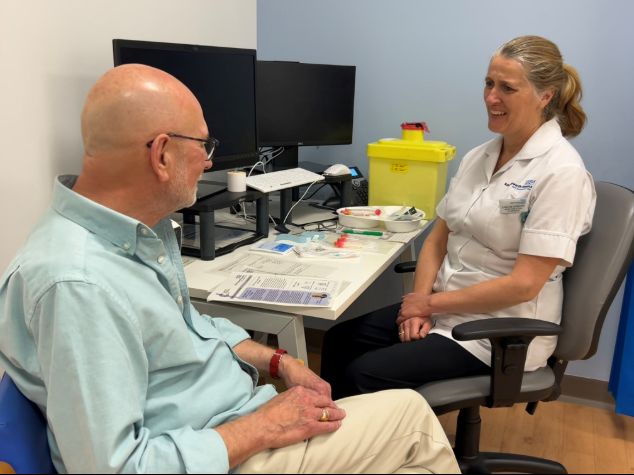
The research team collected extra research blood samples from those who took part in the study every six months for up to five years. These blood samples will be used to do a variety of tests that will hopefully help to develop a better and more sensitive test for diagnosing cancer at an earlier point in time than we are currently able to.
Additionally, the team collected clinical information and x-ray or scan reports that were part of normal clinical care as well as any left-over biopsy material from samples routinely taken.
The samples will be used to look for proteins in the blood and for genetic changes that may influence cancer genes and for other signs that might suggest early stages of cancer.
We collected all of this information during normal clinical appointments wherever possible.
How many and how will patients be recruited? Where will the study take place?
The study recruited 850 adult patients who had treatment at least two years ago with the aim to cure their primary lung cancer by using surgery, radiotherapy, or a combination of chemotherapy and radiotherapy (also known as chemoradiotherapy).
Recruitment is now completed. Patients were recruited between January 2020 and September 2024, across UK NHS centres in Burton, Derby, Cambridge, Glasgow, Gartnavel, Mid and South Essex, London, Leicester, Liverpool, Manchester, Norwich and Nottingham.
What will happen to the findings of the study?
The results of what we discover will be published in ‘open-access’ [1], ‘peer-reviewed’[2] medical journals and presented at international clinical and scientific meetings. This way we hope to make the findings available to as many people as possible.
[1] ‘Open-access’ = publications that make research information available to readers at no cost, as opposed to the traditional subscription model in which readers have access to scholarly information by paying a subscription (usually via libraries).
[2] ‘Peer-reviewed’ = is the evaluation of work by one or more people with similar competencies as the authors of the work. It is a form of self-regulation by qualified members of a profession.